
Halloween Shopping Checklist for Families: Costumes, Candy, Parties & School Events
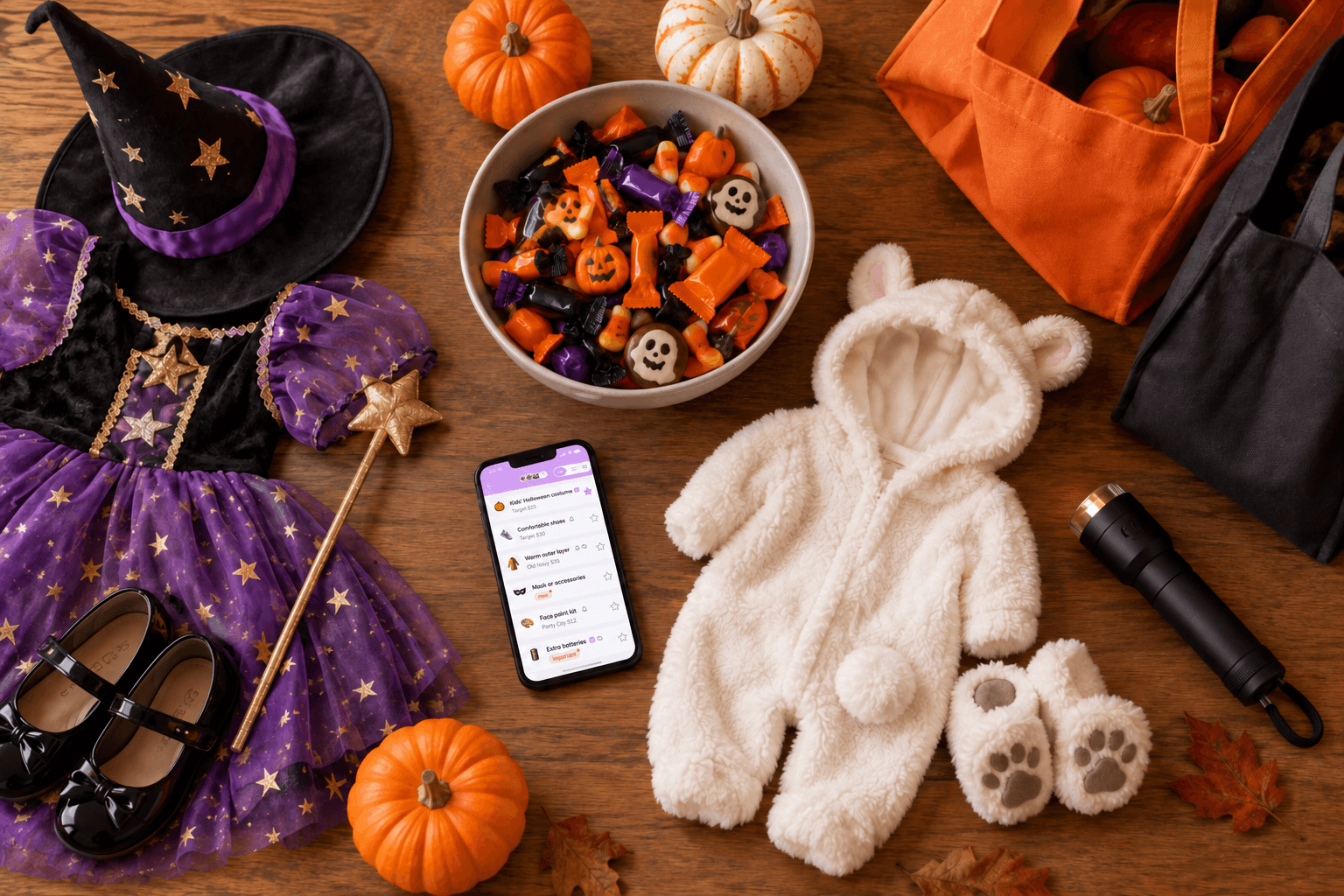
Halloween is full of fun, but the shopping can get surprisingly complicated. One child needs a costume accessory, another has a school party, and someone still needs to pick up candy, treat bags, and decorations.
A little planning can make Halloween preparation much easier.
Quick Answer: What Should Be on a Family Halloween Shopping Checklist?
A family Halloween shopping checklist should include costumes and accessories, trick-or-treating supplies, school-approved treats or contributions, and any party or decoration essentials.
Before shopping, check what you already own, confirm school requirements, set a budget, and assign one person to each purchase.
Keep everything in one shared list so family members know what is needed, who is buying it, and what has already been purchased.
1. What Belongs on a Family Halloween Shopping Checklist?
Not every family needs every Halloween item. Start with the activities your household is actually planning, then use the categories below to build your shopping list.
Important: Check school guidelines before buying food, treats, or classroom supplies.
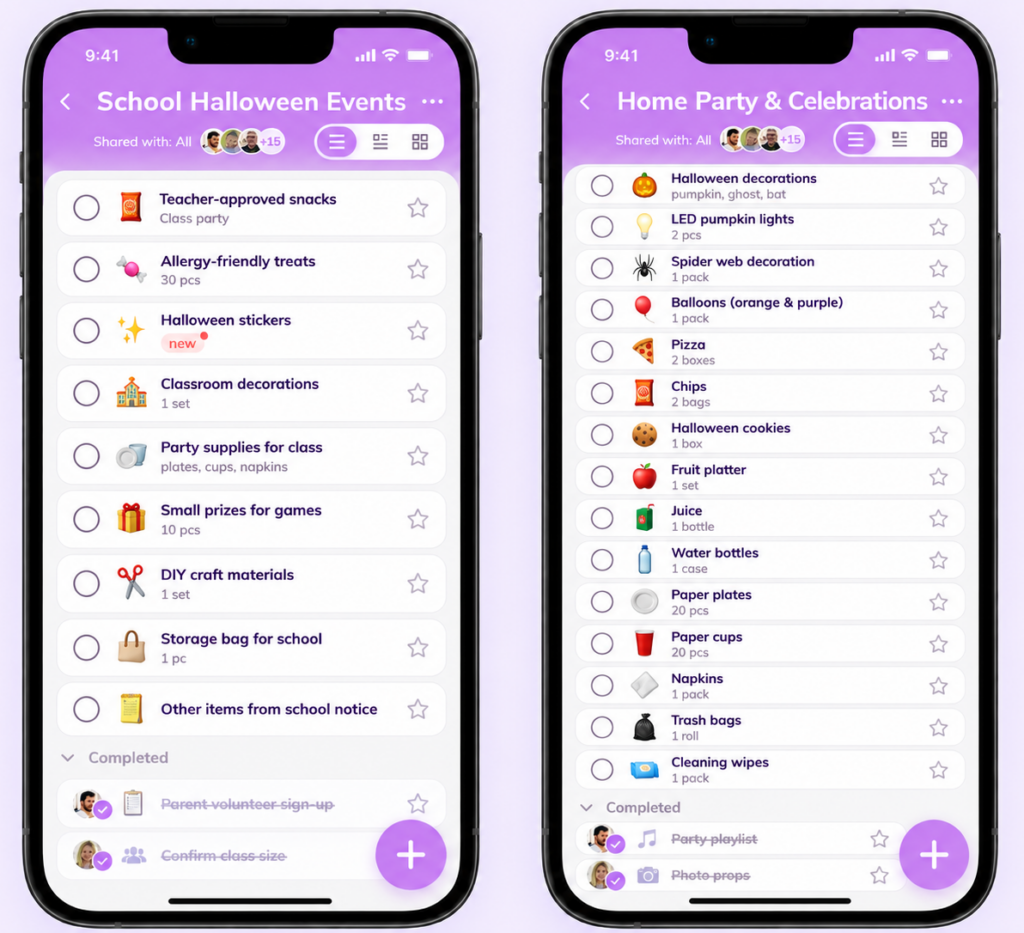
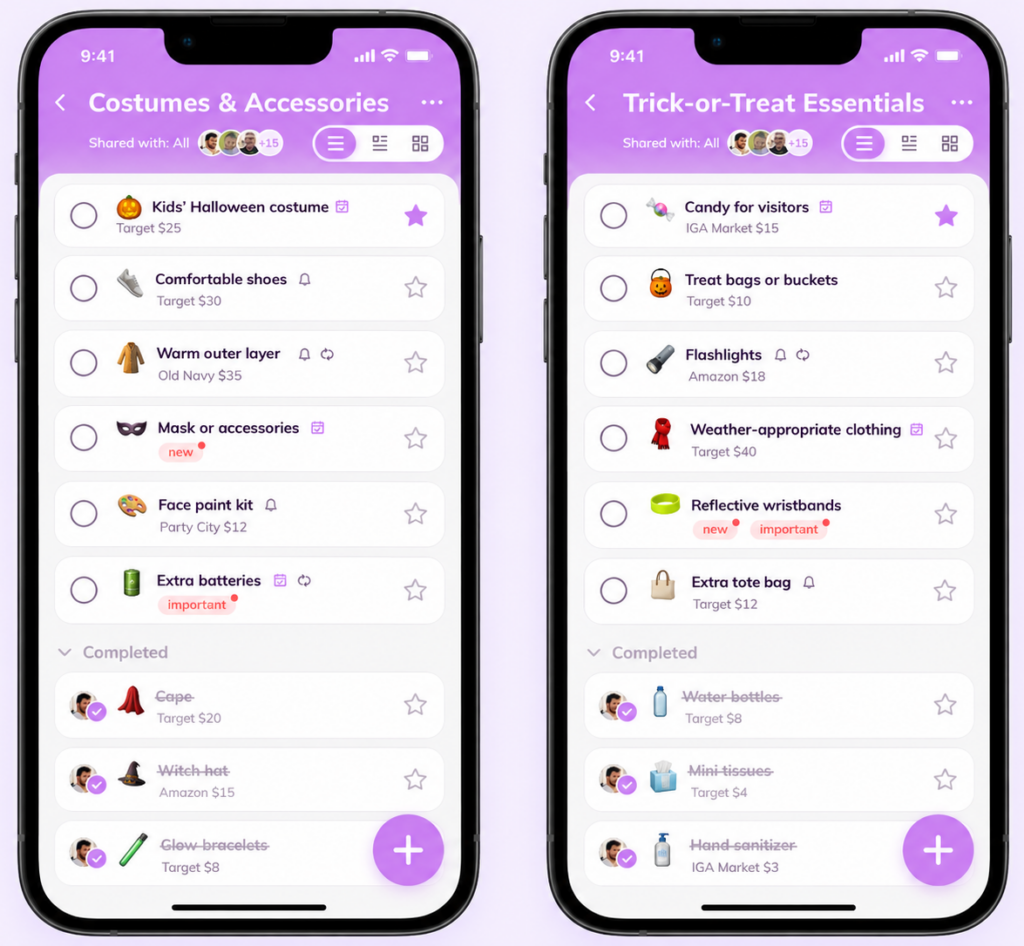
The best Halloween checklist isn’t the longest one. It’s the one that matches your family’s actual plans.
2. What Should Parents Check Before Buying School Halloween Treats?
School Halloween events often have different rules from home parties.
Before purchasing anything for a classroom celebration, confirm:
- Food and allergy policies: Are homemade treats allowed? Do contributions need to be individually packaged? Are particular ingredients restricted?
- Class size: How many children and teachers need to be included?
- Approved contributions: Is the teacher requesting snacks, decorations, craft supplies, or non-food items?
- Delivery requirements: When and where should contributions be dropped off?
Don’t assume a familiar snack is suitable for every classroom. Keep ingredient labels available when required.
If food isn’t permitted, ask the teacher whether stickers, pencils, craft materials, or another non-food contribution would be welcome.
Shopping tip: Add a note such as “Confirm with teacher before buying” to your family checklist. This can prevent unnecessary spending on items the school cannot accept.
3. How Can Families Keep Halloween Shopping Within Budget?
Halloween spending can grow quickly when costumes, candy, school events, and decorations are purchased separately.
A simple budget helps your family decide what matters most before shopping begins.
Start with One Total Budget
Choose an amount your household is comfortable spending. Then divide it into categories:
| Category | What to Budget For |
|---|---|
| Costumes | Clothing, accessories, makeup, repairs |
| Trick-or-Treating | Candy, bags, lights |
| School Events | Approved classroom contributions |
| Home Celebrations | Decorations, snacks, party supplies |
| Extra Expenses | Unexpected essentials |
You don’t have to spend something in every category.
Check What You Already Have
Look through closets, storage boxes, and previous Halloween supplies before purchasing anything new.
A reusable trick-or-treat bucket, costume accessories, or leftover decorations may already cover several checklist items.
If you regularly forget clothing or shoe sizes while shopping, Cubbily’s Little Things feature can help your family keep reusable size and preference notes in one place.
Separate Essentials from Extras
Identify what your family truly needs for planned events. Treat additional decorations, themed accessories, and impulse purchases as optional.
For online shopping, check estimated arrival dates and return policies before placing an order.
And don’t wait until Halloween night to discover that a costume doesn’t fit.
4. How Do You Prevent Duplicate Halloween Purchases?
One of the easiest ways to overspend is having multiple family members buy supplies without knowing what anyone else has purchased.
The solution is a shared Halloween shopping list with clear ownership and purchase status.
For each item, record:
- Item: What needs to be purchased
- Quantity: How many are required
- Buyer: Who is responsible
- Status: Needed, ordered, or purchased
- Deadline: When the item needs to be ready
Example: A Shared Family Halloween Shopping List
| Item | Quantity | Buyer | Status |
|---|---|---|---|
| Costume accessories | 2 sets | Alex | Purchased |
| Halloween candy | 2 bags | Sam | Needed |
| School party contribution | 1 set | Alex | Awaiting school confirmation |
| Treat bags | 2 packs | Sam | Ordered |
| Flashlight batteries | 1 pack | Alex | Check at home |
Illustrative example — adjust items, quantities, and responsibilities for your household.
A useful rule: An item isn’t purchased just because someone plans to buy it.
Keep the status updated when an order is placed or a shopping trip is finished. Before buying additional supplies, check the shared list again.
Keep Everyone Updated with Cubbily Family Lists
Instead of managing separate text messages and paper notes, families can use Cubbily Family Lists to organize shared Halloween shopping tasks.
Create a Halloween list, assign items to family members, add helpful notes, and set reminders or due dates where needed.
This helps everyone see who’s handling each task without repeatedly asking, “Did someone buy the candy?”
FAQs
When should families start Halloween shopping?
Ideally, start Halloween shopping two to three weeks before October 31. This gives you enough time to compare prices, order costumes, check sizes, and prepare for school events. If you have multiple kids or plan to shop online, starting earlier can help avoid last-minute stress and shipping delays.
What’s the easiest way to share a Halloween shopping checklist?
Use one shared digital checklist where family members can see items, quantities, responsibilities, and purchase status. Cubbily Family Lists lets families share shopping tasks, assign participants, and keep reminders alongside the rest of their household plans.
What should I do if a Halloween costume or supply doesn’t arrive on time?
Check local stores for alternatives and see what you can reuse from previous years. Simple DIY costumes, everyday clothing, and accessories you already own can make great last-minute options. Keep backup items on your family shopping checklist so everyone knows what still needs to be prepared.
What should be on a Halloween trick-or-treat checklist?
Include a costume, comfortable shoes, a treat bag, a flashlight or visibility accessories, and suitable clothing for the weather. If your family plans to hand out treats, add candy or approved alternatives to the shopping list.
Make Halloween Shopping a Family Effort
Halloween preparation should be part of the fun, not another source of stress.
Start with a realistic checklist, confirm school requirements, set a spending limit, and check what your family already owns.
Most importantly, make responsibilities clear so everyone knows what needs to happen next.