
How to Use a Shared Calendar as a Couple Without Constantly Asking “When Are You Free?”
Quick Answer
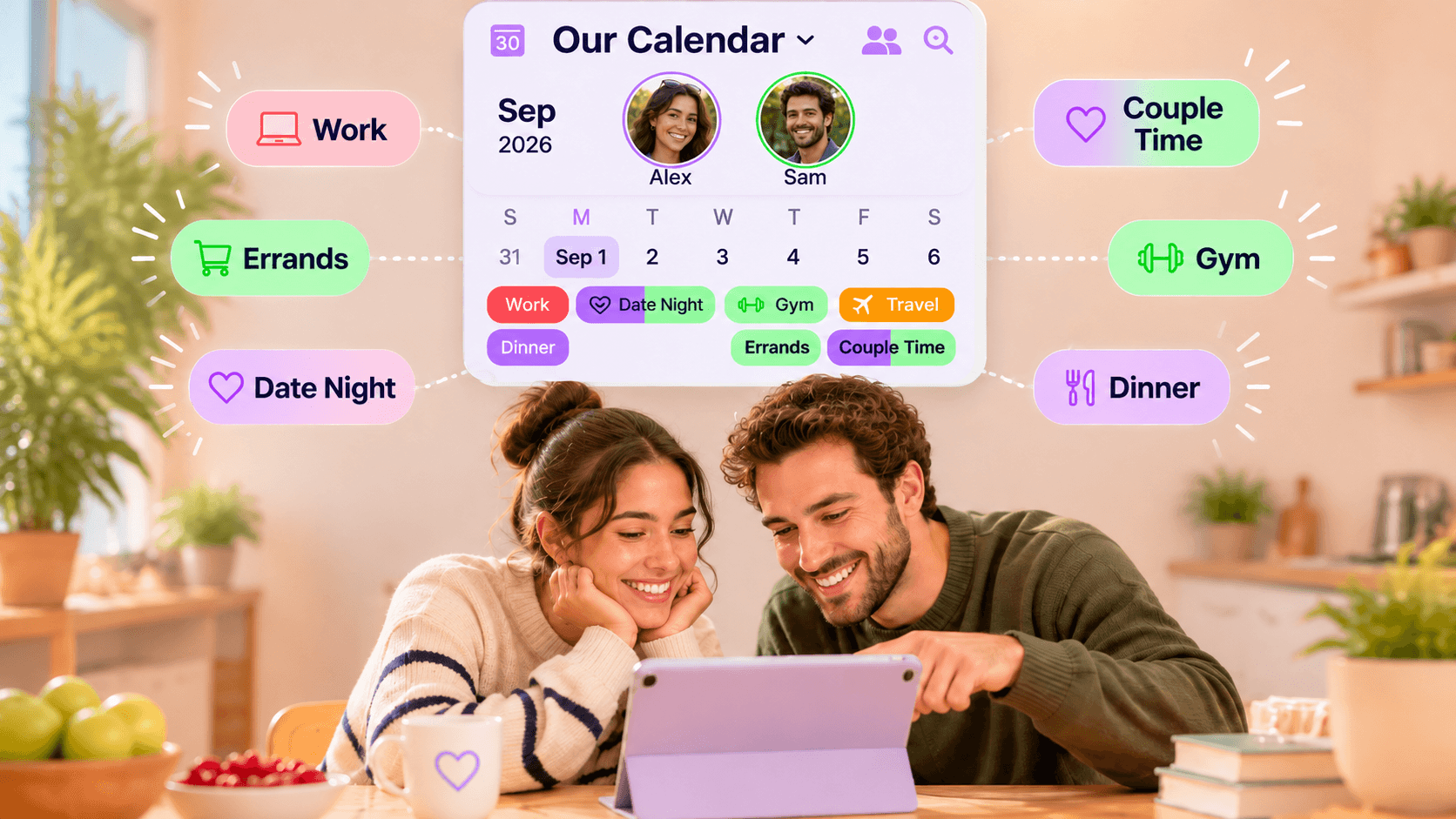
A shared calendar for couples gives both partners a clear view of plans that affect their time together. Add work shifts, travel, appointments, social commitments and date nights, then use member colors and relevant reminders to avoid scheduling surprises. Share what helps you coordinate—not every detail of each other’s lives.
If you have ever texted “Are you free Friday?” only to discover there is a work dinner, a friend’s birthday or an appointment already on the schedule, you are not alone. Many couples are not short on communication. Their plans are simply scattered across different calendars, apps, messages and memories.
A shared calendar brings the plans that affect both of you into one view. That makes it easier to find time together, avoid last-minute changes and make your own plans with a clearer picture of the week.
Why Couples Keep Asking “When Are You Free?”
Picture this: one partner suggests dinner on Friday. The other thinks the evening is open, but later remembers a team event. Saturday is suggested instead—until a family visit appears. Nobody was trying to leave the other person out. The information just was not visible when the plan was made.
This kind of back-and-forth often happens when one person uses a work calendar, the other relies on a phone calendar, and shared plans live in text messages. Each person has a partial picture.
Share the Schedules That Affect Each Other—not Everything
The best shared calendar is not necessarily the one with the most information. It is the one that shows the plans your partner needs to know about.
If a plan changes your partner’s time, availability, transportation or expectations, it is probably worth adding to the shared calendar.
For example, a late meeting matters if it changes dinner plans. A weekend trip matters if you had planned to spend that time together. A doctor’s appointment may matter if your partner is driving you. A friend’s birthday may matter if you are both invited.
Usually useful to share: Work shifts, travel, appointments, dinner plans, family visits, date nights, shared errands and events you are attending together.
Usually okay to keep personal: Private notes, unrelated work meetings, solo errands and personal tasks that do not affect your partner’s plans.
You can also share availability without sharing every detail. “Busy” or “unavailable 2–5 p.m.” may be all your partner needs to know. The goal is coordination, not constant visibility into each other’s lives.
Use Different Colors for “Mine, Yours, and Ours”
When two schedules appear in one calendar, consistent colors make the view easier to scan. You might use one color for your plans, another for your partner’s, and a third for things you are doing together.
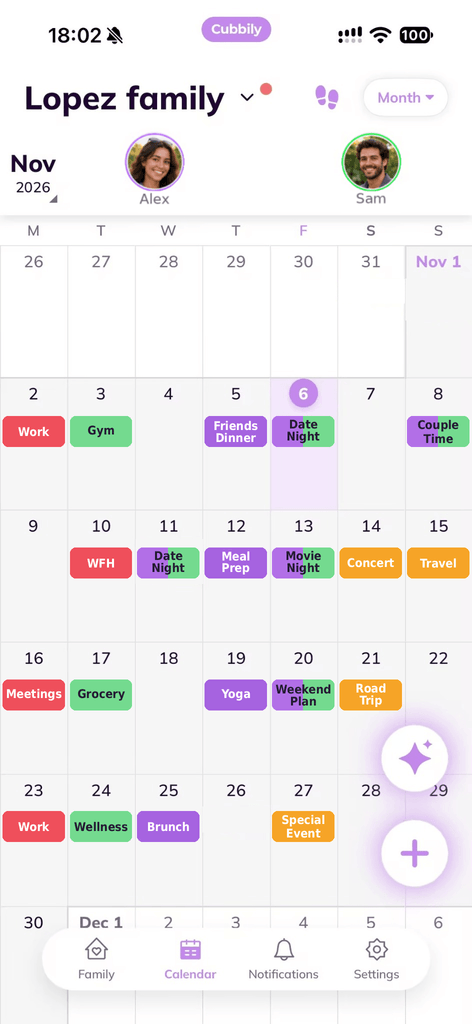
The exact colors do not matter. Agree on a simple system and use it consistently. Cubbily lets members use color-coded schedules, so each partner can quickly distinguish individual plans from shared events in the same calendar.
Make Date Nights Easier to Find
Instead of picking a date first and then discovering a conflict, start by looking at the open spaces in both schedules.
For example, Thursday evening may be clear for both of you, while Saturday is already booked for one partner. You could choose a relaxed dinner on Thursday and leave Saturday free for separate plans.
A date night does not have to mean a big evening out. It could be breakfast before work, a walk after dinner, a movie at home or a free afternoon together. The useful step is making that time visible and treating it as a real plan.
Try this simple approach
- Add the commitments that are already fixed.
- Look for a time window both partners have available.
- Choose something that fits the time you actually have.
- Add it as a shared event so neither person accidentally books over it.
A shared calendar does not create more couple time. It makes the time you already have easier to notice and protect.
Knowing Your Partner’s Schedule Also Protects Your Own Time
Shared planning should not mean doing everything together. If your partner has golf with friends on Saturday afternoon, you can make your own plans without waiting for a last-minute update.
You might book a workout, meet a friend, run errands or simply enjoy a few hours to yourself. The same goes the other way: when your plans are visible, your partner can organize their own time too.
This is one of the underrated benefits of a shared calendar. It can support independence because each person has a clearer picture of when the other is busy, free or already committed.
For couples who live separately, this is useful for planning visits, travel time and weekends together. For couples who live together, it can help coordinate shared responsibilities while keeping personal time personal.
Use Reminders Only When the Other Person Needs to Act
Not every event needs to notify both people. A reminder is most useful when someone needs to remember, prepare or do something.
| Plan | Who may need a reminder? | Why |
|---|---|---|
| Dinner reservation | Both partners | Both are attending. |
| One partner’s dentist appointment | Usually the person attending | The other partner may not need an alert. |
| Airport pickup | The driver and traveler | Both need to coordinate timing. |
| Weekend trip departure | Both partners | Both may need to pack or leave on time. |
Use reminders for the moments where forgetting would create a problem. Too many alerts can become background noise, so keep them relevant. Cubbily supports event reminders and shared updates, with available options depending on plan and settings.
A Simple 10-Minute Weekly Couple Calendar Routine
You do not need a long planning meeting. Pick a time that works—Sunday evening, Monday morning or over coffee—and look at the next seven days together.
- Work & availability Any late meetings, shifts or travel?
- Social plans Who has plans with friends or family?
- Appointments Anything that needs a ride or support?
- Time together When is a realistic window for a date or shared activity?
- Shared errands Anything one person can pick up or handle?
- Changes Has anything moved since you last checked?
Keep it practical. The point is not to plan every minute of the week. It is to catch the commitments that could affect each other before they turn into a surprise.
How to Set Up a Shared Couple Calendar in Cubbily
Start with the schedules you both need to see. Invite your partner to the shared calendar, give each member a consistent color, and add the commitments that affect your time together. You can also sync supported Apple or Google calendars to bring existing schedules into the planning picture.
Use shared events for date nights, trips and plans you are attending together. Add reminders when both people need to act. If you also manage shared errands or household plans, Cubbily’s Family Lists can keep grocery items, to-dos and other shared lists alongside your calendar rather than burying them in chat messages.
Frequently Asked Questions
What should couples put on a shared calendar?
Add plans that affect the other person’s availability, time, transportation or expectations: work shifts, travel, appointments, social plans, date nights and shared commitments. Private details and unrelated personal tasks do not need to be shared.
Is a shared calendar good for a relationship?
It can reduce avoidable scheduling confusion by making relevant plans visible. It is a coordination tool, not a substitute for communication or a requirement to share every detail.
How do couples share calendars without losing privacy?
Agree on what information is useful to share. You can show that you are unavailable without adding private details, and keep personal appointments or tasks in your own calendar when they do not affect shared plans.
How can couples find time for date nights?
Add existing commitments first, look for open time both partners have, and reserve a realistic window. Date time can be a recurring event or a one-off plan, depending on your routines.
Can couples use a shared calendar if they do not live together?
Yes. Couples who live separately can share plans such as visits, travel, events, appointments and date nights. Each person can keep unrelated personal commitments private.