
How to Plan Halloween With Multiple Kids Without Missing an Event
Quick answer
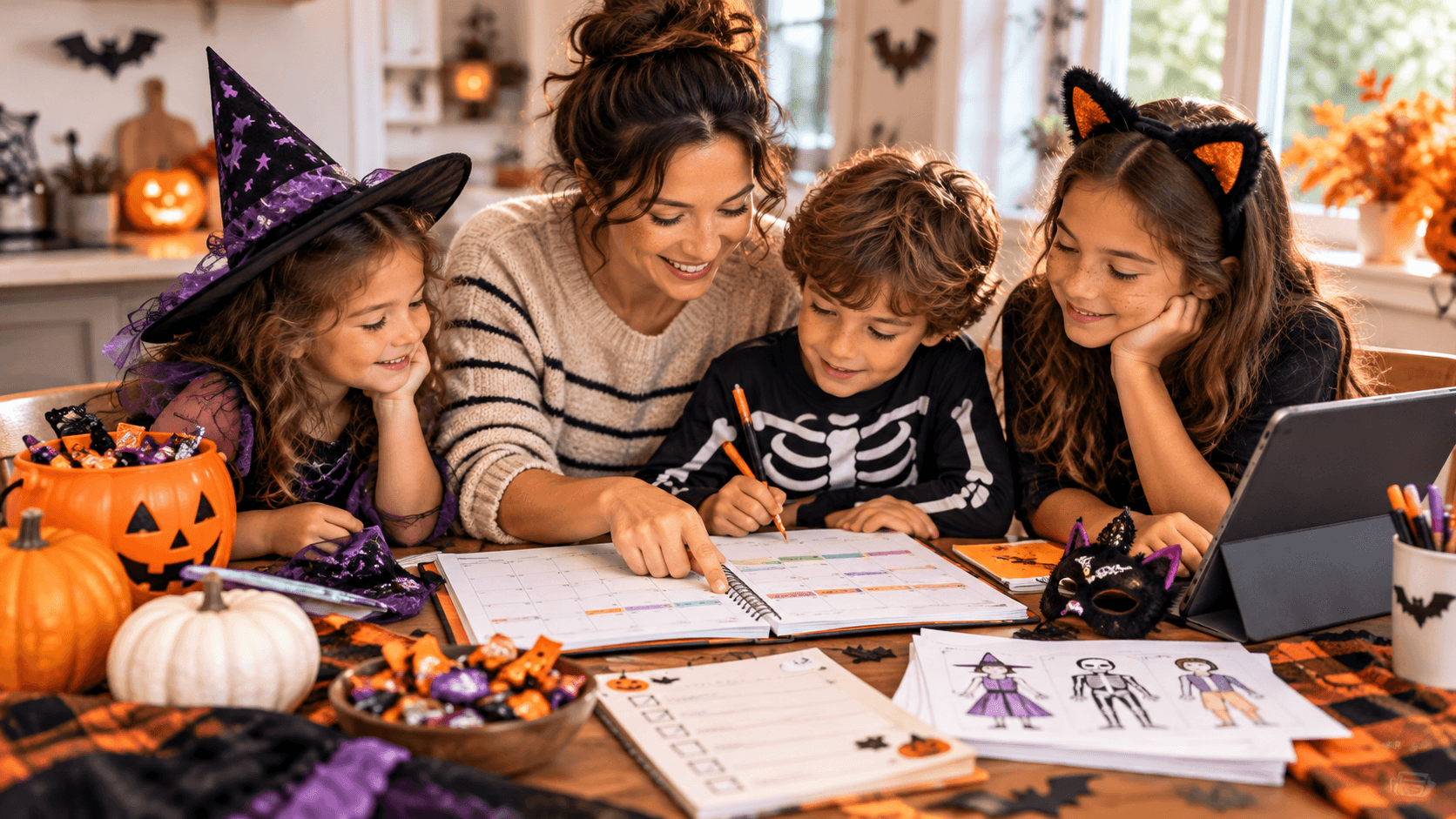
Halloween planning for families with multiple kids is easier when you first list each child’s events separately, then combine everything on one family calendar. Compare arrival times, travel, costumes, school supplies and which adult is responsible for each handoff. For 2026, Halloween falls on Saturday, October 31; some schools may hold their celebrations on Friday, October 30. Check the actual dates with each organizer before making your plan.
How do we track different Halloween events for siblings?
Start with a separate mini-plan for each child rather than trying to remember every invitation in one conversation. Record the date, start and end time, exact location, costume rules, items to bring, and responsible adult. Check teacher messages and organizer notices: two classrooms in the same school may have different parade times or policies about masks, treats and family visitors.
Then place those events side by side on a shared family calendar. Add travel time before pickups and label whether an activity is on Friday or Saturday. This matters in 2026 because Halloween is on Saturday, October 31, while some school events may happen the day before. Give every event a clear owner so “someone will pick them up” becomes “Dad will pick up Ava at the front gate at 3:15.”
What if two children have events at the same time?
First, check the real overlap. A parade that ends at 3:00 PM and a party that starts at 3:15 PM may look manageable on paper, but the drive, parking and school pickup line can make it impossible for one adult. Compare travel time and handoff time, not just the event start times.
If two adults can split coverage, assign each person a specific child, destination and pickup. If a grandparent or trusted caregiver can help, ask early and verify the school’s authorized pickup rules. If there is no safe way to attend both, choose what is feasible and explain the decision in advance. Consider taking a photo of the event a child cannot attend or planning a small at-home activity rather than making promises you cannot keep.
5-minute conflict check: Who takes each child? When must they leave? Who is approved to pick them up? What happens if one event finishes late?
How can siblings with different preferences enjoy Halloween?
Children do not need identical Halloween plans to have a good evening. A younger child may want a short route and an early bedtime while an older sibling is excited about a longer walk or a costume party. Ask each child for one must-do activity and one thing they are comfortable skipping. Choose a shared moment—such as photos, dinner or the first few houses—before the evening splits.
When splitting up is practical, make sure each group has appropriate adult supervision. Agree on the route, a clear meeting location and a return time. Bring any necessary medication or comfort items, and plan a quieter alternative for children who dislike noise, crowds or scary decorations. Treat a tired child’s early exit as part of the plan, not as a failed Halloween.
🏠
Short and cozy
A younger child visits a few houses, then heads home with a designated adult.
🍬
Keep exploring
An older sibling continues with another adult until the agreed return time.
What should we prepare the night before?
Put every child’s costume, comfortable shoes and weather layer in a labeled spot. Try on anything unfamiliar, then check the items each school or event specifically requires. Keep classroom treats separate from neighborhood candy bags so supplies do not end up in the wrong backpack. If your children attend events on different days, pack for Friday and Saturday separately.
Finally, confirm the pickup adult, contact method, meeting point and backup plan. Charge phones and review the weather forecast. For trick-or-treating, plan a well-lit route, use visibility aids when needed and remind children to stay with their supervising adult. Recheck organizer updates before leaving. A simple exit plan makes it easier to respond when a costume tears, rain starts or a child becomes tired.
Halloween night-before checklist
- Costumes: Lay out each outfit, shoes and weather layer.
- School: Pack separately for any Friday classroom event.
- Treats and bags: Check supplies for each child.
- Timing: Reconfirm event dates, hours and locations.
- Coverage: Assign adults for drop-off and pickup.
- Permissions: Verify any school pickup authorization.
- Safety: Set a route, meeting spot and return time.
- Devices: Charge phones and check the forecast.
- Backup: Agree on rain and early-exit alternatives.
How can families use one calendar to organize Halloween plans?
A shared calendar is most helpful when it answers who, where and when at a glance. Create a separate entry for each child’s school event, party or pickup, including the address and the adult responsible. Add travel buffers so back-to-back commitments do not accidentally overlap. Keep costume purchases, snacks and last-minute supplies on a shared shopping or family list rather than inside a long message thread.
With Cubbily, parents can review family plans together instead of relying on one person to remember everything. The important step is still agreeing on the assignments: a calendar can show a conflict, but an adult needs to own each pickup and confirm any change.
✦A simple shared-plan workflowThree steps
01 Add the events
Include a child’s name, date, location and start time.
02 Assign coverage
Decide which adult handles each arrival and pickup.
03 Review together
Recheck the plan the night before and share any changes.
FAQs
How early should families start planning Halloween with multiple kids?
Start one to two weeks in advance if your children have separate school events or costumes to organize. Collect confirmed dates, add them to a shared family calendar and check for overlaps. Review the plan a few days before Halloween when teachers and organizers may send final details.
What if school Halloween events and trick-or-treating happen on different days?
Put them on separate calendar entries and prepare supplies for each day. Halloween in 2026 is Saturday, October 31, so some schools may schedule celebrations for Friday, October 30. Check with your school rather than assuming an event date, and confirm adult coverage for both days.
How can families plan Halloween on a budget with multiple children?
Set a family budget for costumes, treats and optional activities before shopping. Check what you already have, consider reusing costume pieces or swapping with friends, and invite each child to pick their top priorities. A shared shopping list helps avoid duplicate purchases.
What if Halloween plans change at the last minute?
Keep one simple backup plan for rain, delays or tired children. Decide which event matters most, identify an indoor alternative and agree on a safe pickup location. Update the family calendar, but also message the adults involved so no one relies only on an unnoticed notification.