
Daylight Saving Time and Shift Work: How Families Can Prepare for Fall Back
Quick answer
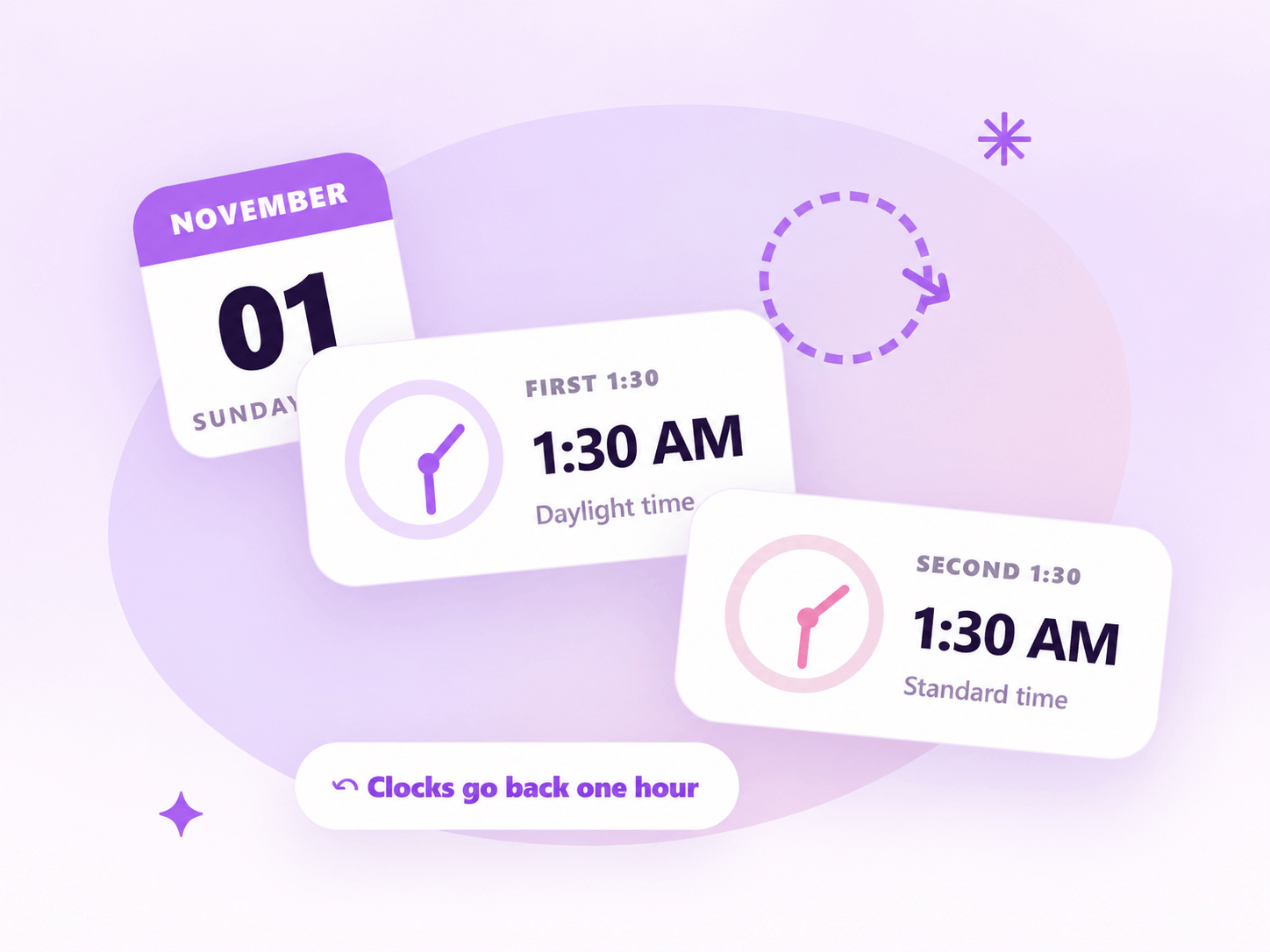
Daylight saving time ends on Sunday, November 1, 2026, in most U.S. locations that observe it. At 2 a.m., clocks return to 1 a.m. For shift-worker families, the priority is confirming the actual shift and childcare handoff times before that repeated hour creates confusion.
When do clocks fall back in the United States in 2026?
The change is November 1 at 2 a.m. local daylight time in participating locations. Hawaii and most of Arizona do not observe daylight saving time. Check the location where the shift or trip occurs, especially when family members are in different states.
Remember: The change happens at the local time where the shift or trip takes place—not necessarily the time zone where your family lives.
Can a night shift be longer when the clocks fall back?
A shift from 7 p.m. Saturday to 7 a.m. Sunday spans 13 elapsed hours if it crosses the local fall-back transition and those endpoints stay unchanged. The employer may organize staffing differently. Confirm the actual end time and handoff with the supervisor; do not infer payroll treatment from a calendar entry.
How should families label a handoff during the repeated hour?

Avoid an unexplained “1:30 a.m.” when two occurrences are possible. Ask which occurrence is intended and use the relevant time-zone abbreviation or UTC offset where needed. Confirm pickup by direct message. For a normal morning handoff, still check travel and the worker’s expected return time.
What should families check before the clock change?
Compare the work roster with calendar entries; confirm childcare start and finish; check destination time zones for travel; and review household clocks. Do not assume every device or recurring event adjusts as intended. Leave the post-shift period flexible, and agree on family commitments after the actual finish is known.
Your fall-back family checklist
- Compare the work roster with shared calendar entries.
- Confirm childcare start, finish, and the person handling each pickup.
- Check destination time zones for overnight travel.
- Review household clocks, devices, and their settings.
- Verify recurring events and reminders after the clock change.
- Keep post-shift family plans flexible until the actual finish is confirmed.

Source & fact check
Daylight Saving Time 2026 in the United States — timeanddate.com ↗
Shift hours, staffing, and payroll treatment can depend on the employer. Confirm details directly with your workplace.
FAQs
1. Does daylight saving time affect night shift pay?
Yes, it can. When clocks fall back, an overnight shift may include an extra hour of actual work. Hourly employees generally must be paid for all hours worked, including the repeated hour. Whether that extra time qualifies for overtime depends on total hours worked and applicable labor laws. Check with your employer or payroll team before the shift.
2. Will shared calendars automatically adjust for daylight saving time?
Many digital calendars adjust automatically when the correct time zone is set, but recurring shifts and events during the repeated hour may still need review. Before November 1, 2026, double-check overnight schedules, event time zones, and childcare appointments. Confirm any unclear times directly with the people involved.
3. How can parents coordinate childcare during the fall-back time change?
Start by confirming when each parent’s shift actually begins and ends. If a childcare handoff happens during the repeated hour, clearly identify whether it refers to the first or second occurrence of that time. Use a shared family calendar to organize pickup responsibilities, add reminders, and keep everyone informed of schedule changes. Arrange backup childcare if an overnight shift may run longer than expected.